by GMJoe™ on behalf of the Northland Potato Grower Association magazine
It begins, as many such things do in this country, with potatoes. Not as sustenance, not even as commerce, but as the raw material of reputation—a humble tuber pressed into service as a vehicle for influence, sponsorship, and the soft mechanics of persuasion. One would be forgiven for thinking that an agricultural magazine with a circulation of 4,300 might lack the grandeur of national consequence. But then, one would be unfamiliar with the unique American genius for dressing the local as universal, and for recasting humble fields as theaters of strategic marketing.
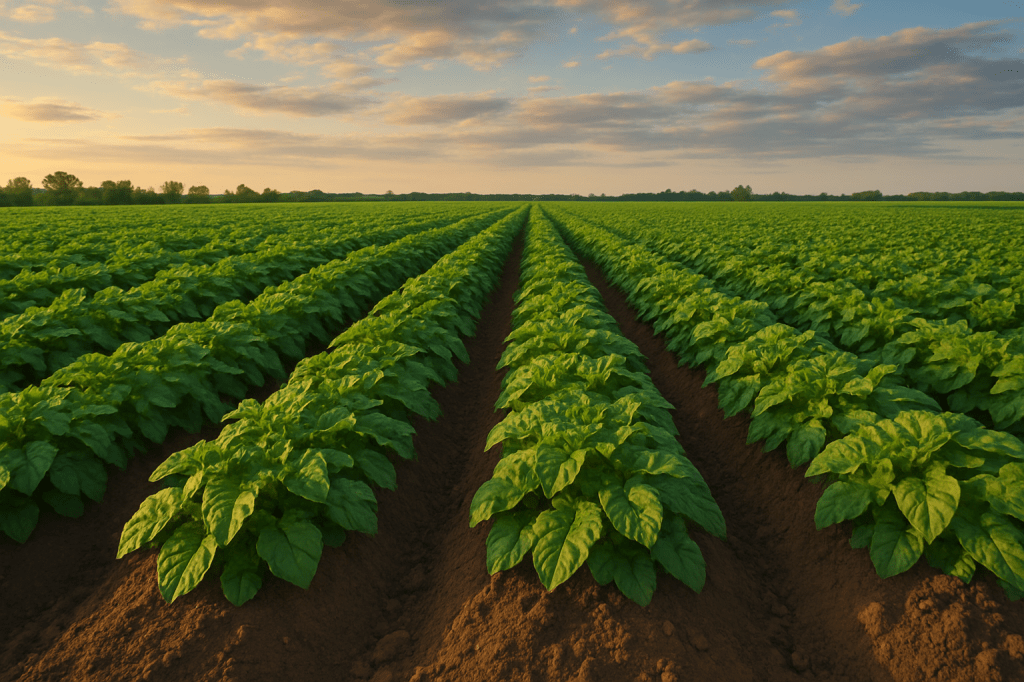
The meeting, staged without fanfare but with unmistakable intent, circled a central truth: if the product is local, the marketing must feel native, even when funded by entities whose addresses are registered in buildings with elevators. Syngenta, the multinational that has somehow managed to present itself as both everywhere and endearingly nearby, emerged as the intended benefactor of this marketing recalibration. The magazine—Northland’s own paper barn-raising—needed a fuller embrace from the corporate parent. Ads, yes, but not merely ads: quarter-page gestures, full-page salutes, and above all, recognition that influence in the Red River Valley is built not by volume, but by volume plus proximity.
Joe, whose role defies simple categorization (but who we may safely call the Socratic consultant in the room), maneuvered the conversation toward clarity. Advertising, he reminded the group, is not simply about promotion. It is about identification—more precisely, identification with. Northland, if it is to endure, must be seen not merely as a publication, but as a vessel: for regional pride, corporate positioning, and the slow burn of brand loyalty born not of slogans, but of adjacency. There is, after all, a politics to paper.
Budgetary figures surfaced like prairie dogs: the cost of a quarter-page here, the possibility of a full-page there. But the real discussion—what they were truly talking about—was legitimacy. Not the kind that is voted on, but the kind that is earned in clubhouses, in tournament signage, in back pages and local features. It was agreed: local dealers must be included. Not as tokens, but as participants in the broader theater of agricultural affirmation. The farmer, once seen as an end-user, now appears as a brand ambassador with muddy boots.
And then came the EMP plan for 2026—a curious acronym that seemed to straddle disaster preparedness and marketing futurism. Perhaps it was both. In any case, it was agreed upon in tones that suggested its necessity was already overdue. In this regard, the magazine does not merely report on agriculture—it forecasts the cultural weather systems surrounding it.
The national AMP team at Syngenta—another acronym, another layer—was deemed worthy of engagement. One does not simply advertise anymore; one aligns vertically, horizontally, and diagonally. One builds packages. One sponsors golf tournaments. One becomes, in the language of the age, a partner.
The meeting adjourned not with a bang, but with a checklist. Items to be pursued, documents to be sent, phone calls to be made. But beneath the banalities of follow-ups and demographic reports, one could sense the deeper movement: a region asserting its narrative, a publication asserting its worth, and a contractor named Joe holding the line between them. Not with pomp, but with clarity. The most subversive clarity of all: that the stakes are real, even when disguised as potatoes.
To continue in the same vein, we descend further—not into the details, which are always negotiable—but into the dynamics, which never are. Power, in American commerce, rarely announces itself with fanfare. Instead, it hides behind agendas, the innocent language of “support,” and the suggestion that if everyone just does their part, the machine will purr. What was under discussion, truly, was not whether Syngenta would buy a page, or a quarter of one, but whether they would buy into Northland itself. Would they affirm the magazine’s relevance, not merely in budget allocations, but in perception? Would they signal to their national audience, via the grainy gloss of a regional agricultural monthly, that this corner of the country matters?
Herein lies the great paradox of American agriculture in the age of strategic marketing: its substance is rooted in soil, yet its survival is now a matter of semiotics. One must be seen. One must be reflected. It is no longer enough to grow. One must also narrate. The growers, long the protagonists of their own quiet epics, now find themselves as extras in a grander production—the branded pageant of agribusiness storytelling.
Of course, the meeting, like all such gatherings, trafficked in numbers. Circulation across five states, metrics on readership, the granular breakdown of who sees what and when. But metrics, as any good bureaucrat or marketing executive will tell you, are merely the weaponization of hindsight. They are less about what is, and more about justifying what someone has already decided to do. In this case, the action items were not about discovering whether Syngenta should invest, but choreographing a plausible reason why they already must.
There was, too, that subtle invocation of the golf tournament—a minor event on paper, but an unmistakable rite in the peculiar religion of Midwestern corporate networking. The levels of sponsorship—gold, silver, bronze, perhaps even potato—carry with them not just status, but an implicit understanding that presence is as powerful as performance. To be seen supporting the growers, to have a banner flapping gently above a well-manicured fairway, is to declare allegiance. And allegiance, in this era of fragmented loyalty and algorithmic attention, is a scarce commodity indeed.
The genius of Joe, if I may be allowed a moment of biographical liberty, lies not in his mastery of the pitch, but in his orchestration of meaning. He does not just seek support; he makes support inevitable. He frames the relationship not as a favor, but as a foregone conclusion of wisdom. His tone, one suspects, is that of the steward—not pleading for crumbs, but allocating relevance. The magazine will matter, and the only question remaining is whether those in the room will recognize it before it’s too late to matter with it.
That is the quiet alchemy of regional marketing in America today: turning print into presence, sponsorship into narrative, and meetings like this one into the first chapter of something much grander than a circulation report. Something more akin to mythology.
And why not? After all, this is how civilizations survive—not by being loud, but by convincing those with microphones that silence itself is a form of negligence.
Thus, the real product was never just potatoes. It was conviction. It was coherence. It was the suggestion that somewhere, amid the spreadsheets and the soil, there remains a cause worth underwriting.
And that, in this fractured republic, is the most marketable crop of all.
And so, as the last of the action items were recorded and the room exhaled its polite conclusions, what remained was not merely a plan, but a proposition—unspoken yet unmistakable. That a magazine, modest in pages but vast in purpose, might serve as a fulcrum between industry and identity. That support—true support—is never measured in dollars alone, but in the dignity of showing up when it matters.
This was not just about advertising space. It was about cultural acreage. About who gets to author the story of the land and those who till it. About whether national players like Syngenta will merely place ads—or place themselves—in the narrative arc of a region that still believes in harvests, not headlines.
To invest here is to do something unfashionable in an age of metrics and margins: it is to believe. In the growers. In the magazine. In the idea that something local, something earnest, something printed on actual paper, can still move the dial of consequence.
And if they do not—if the great machinery of corporate approval hesitates, demurs, or defers—then let it be known that the Northland Potato Grower Association, and those like it, will persist anyway. Because belief, unlike funding, is not subject to quarterly review. It grows underground, like the very crop it celebrates—quietly, insistently, inevitably.
And if we are fortunate, it blooms not just into sustenance, but into story.
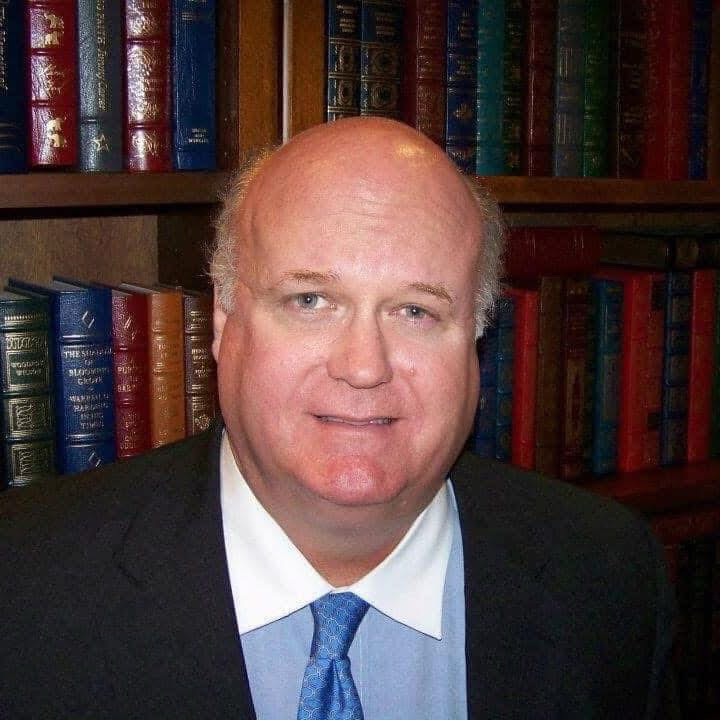
GMJoe™ is a trademark of Joe Cozart © 2025 All Rights Reserved
 GMJoe™ Consulting